Buy online-poker.eu ?
We are moving the project
online-poker.eu .
Are you interested in purchasing the domain
online-poker.eu ?
domain@kv-gmbh.de · 0541-91531010
Buy online-poker.eu ?
'Will + participle 2?'
"Will + participle 2" is a construction used to form the future perfect tense in English. It is used to indicate an action that will be completed before a specific point in the future. This construction is formed by using the auxiliary verb "will" followed by the past participle of the main verb. For example, "By the time you arrive, I will have finished my homework." **
What are the Latin forms of the present participle, perfect passive participle, and future active participle?
The Latin present participle is formed by adding -ns, -ntis to the present stem of the verb. For example, the present participle of the verb "amo" (I love) is "amans, amantis" (loving). The perfect passive participle is formed by adding -us, -a, -um to the verb stem. For example, the perfect passive participle of the verb "amo" is "amatus, amata, amatum" (loved). The future active participle is formed by adding -urus, -ura, -urum to the verb stem. For example, the future active participle of the verb "amo" is "amaturus, amatura, amaturum" (about to love). **


Similar search terms for Participle
Top-Angebote
Products related to Participle:
-
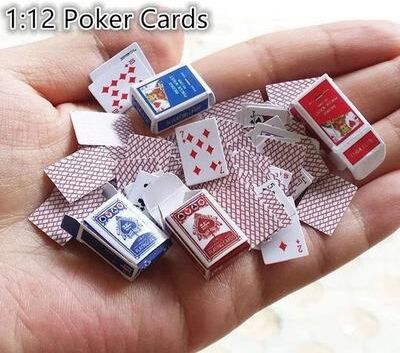
Inspired Living Miniature Poker Cards Set Cute Mini Playing Cards For Dollhouse Decor & Accessories Miniature Poker Cards Set Cute Mini Playing Cards For Dollhouse Decor & AccessoriesTiny details make the biggest difference in a miniature world. These miniature poker cards bring instant personality to your dollhouse scenesadding a playful, livedin charm that collectors and hobbyists love. Designed for 1:12 dollhouse miniatures,...23,97 $*Shipping: 0,00 $Secure redirect to the provider
-
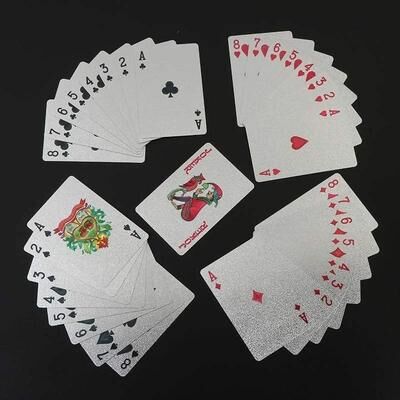
Uplift Picks Silver Foil Playing Cards Waterproof Luxury Poker Deck Silver Foil Playing Cards Waterproof Luxury Poker DeckUpgrade your game night with these stunning silver foil playing cards designed to stand out at any table. Crafted as waterproof plastic poker cards, they combine durability with a sleek metallic finish. This eyecatching luxury poker card deck offers...40,98 $*Shipping: 0,00 $Secure redirect to the provider
-
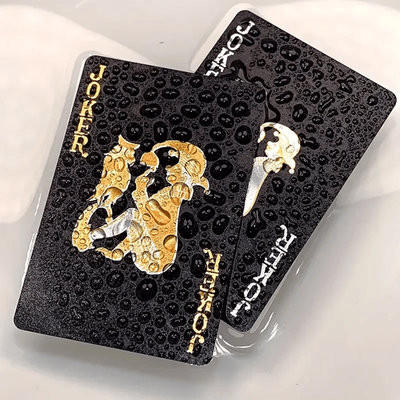
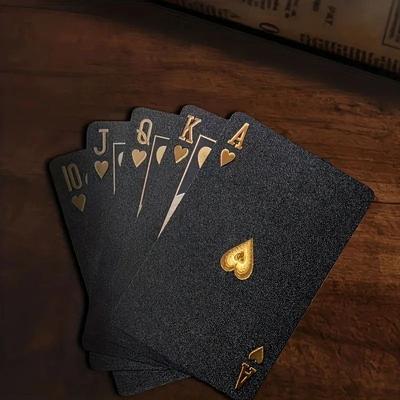
Inspire Essentials Black Gold Waterproof Playing Cards Luxury Poker Deck Black Gold Waterproof Playing Cards Luxury Poker DeckTurn every shuffle into a statement with these striking black gold playing cards designed for players who appreciate bold style. Crafted for durability and smooth handling, this waterproof poker cards deck resists spills and bending, making it...42,48 $*Shipping: 0,00 $Secure redirect to the provider
-
Uplift Picks Luxury Waterproof Black Gold Playing Cards Premium Poker Deck Luxury Waterproof Black Gold Playing Cards Premium Poker DeckAdd a touch of elegance to every game night with these stunning black gold playing cards. Designed for players who appreciate style and durability, this premium deck combines eyecatching design with longlasting performance. The sleek finish and bold...52,98 $*Shipping: 0,00 $Secure redirect to the provider
-
What are participle clauses?
Participle clauses are a type of clause that uses a present participle (-ing form) or a past participle (-ed form) to provide additional information about the subject of the main clause. They can be used to show simultaneous actions, cause and effect, or to provide descriptive details. For example, in the sentence "Feeling tired, she decided to go to bed," the participle clause "Feeling tired" provides additional information about the subject "she." **
-
What is a participle?
A participle is a form of a verb that can function as an adjective or be part of a verb phrase. There are two types of participles in English: the present participle, which ends in -ing (e.g. "walking"), and the past participle, which can end in -ed, -en, -d, -t, -n, or -ne (e.g. "broken"). Participles are used to modify nouns or pronouns, and they can also be used to form verb tenses such as the present perfect or past perfect. **
-
What is the difference between the past participle and the present participle?
The past participle is a verb form used to indicate a completed action or state that occurred in the past. It is often used with auxiliary verbs to form the perfect tenses (e.g., "has eaten," "had gone"). The present participle, on the other hand, is a verb form used to indicate an ongoing action or state in the present or future. It is formed by adding "-ing" to the base form of the verb and is used to create the progressive tenses (e.g., "is eating," "will be going"). **
-
How can the terms premature, simultaneous, and subsequent be explained in relation to past participle, present participle, and future participle?
The terms premature, simultaneous, and subsequent can be explained in relation to past participle, present participle, and future participle based on their timing in relation to the action of the verb. The past participle refers to an action that has already been completed, making it premature in relation to the present moment. The present participle refers to an action that is happening at the same time as something else, making it simultaneous. The future participle refers to an action that will happen at a later time, making it subsequent to the present moment. These terms help to clarify the timing of the action in relation to the verb. **

What does bluff mean in poker?
In poker, to bluff means to make a bet or raise with a weak hand in order to deceive opponents into thinking you have a strong hand. The goal of bluffing is to get your opponents to fold their better hands, allowing you to win the pot without having the best cards. Bluffing is a strategic element of the game that requires reading your opponents and understanding the dynamics of the game. Successful bluffing can be a powerful tool in a player's arsenal, but it also carries the risk of being called and losing the pot. **
What is a nominalized participle?
A nominalized participle is a verb form that has been turned into a noun. This is done by adding a suffix to the participle form of the verb, which allows it to function as a noun in a sentence. Nominalized participles are commonly used in various languages to express actions or qualities in a more abstract or general way. **
Top-Angebote
Products related to Participle:
-
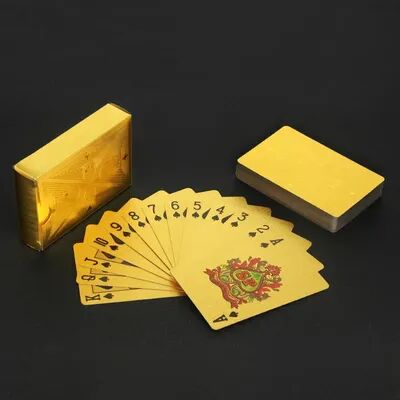
Retailers Go Gold Foil Poker Set Magic, Golden Playing Cards Deck, Gold Plastic Foil Cards, Waterproof Durable Poker Cards Gold Foil Poker Set Magic, Golden Playing Cards Deck, Gold Plastic Foil Cards, Waterproof Durable Poker CardsGolden Playing Cards Deck A perfect combination of durability and luxury, these Gold Foil Poker Set Magic cards are designed for the player who demands both style and quality. Whether youre an experienced player or a casual card enthusiast, these...70,97 $*Shipping: 0,00 $Secure redirect to the provider
-
Retailers Go Luxury Gold Foil Poker Cards, Waterproof Magic Cards, Plastic Playing Cards Set For Games Luxury Gold Foil Poker Cards, Waterproof Magic Cards, Plastic Playing Cards Set For GamesTransform your game nights with the 55pcs Gold Foil Poker Cardsdesigned for those who appreciate luxury and durability. Whether you're hosting a highstakes poker game, performing a magic trick, or simply relaxing by the pool, these 24K gold plastic...49,97 $*Shipping: 0,00 $Secure redirect to the provider
-
Inspired Living Miniature Poker Cards Set Cute Mini Playing Cards For Dollhouse Decor & Accessories Miniature Poker Cards Set Cute Mini Playing Cards For Dollhouse Decor & AccessoriesTiny details make the biggest difference in a miniature world. These miniature poker cards bring instant personality to your dollhouse scenesadding a playful, livedin charm that collectors and hobbyists love. Designed for 1:12 dollhouse miniatures,...23,97 $*Shipping: 0,00 $Secure redirect to the provider
-
Uplift Picks Silver Foil Playing Cards Waterproof Luxury Poker Deck Silver Foil Playing Cards Waterproof Luxury Poker DeckUpgrade your game night with these stunning silver foil playing cards designed to stand out at any table. Crafted as waterproof plastic poker cards, they combine durability with a sleek metallic finish. This eyecatching luxury poker card deck offers...40,98 $*Shipping: 0,00 $Secure redirect to the provider
-
'Will + participle 2?'
"Will + participle 2" is a construction used to form the future perfect tense in English. It is used to indicate an action that will be completed before a specific point in the future. This construction is formed by using the auxiliary verb "will" followed by the past participle of the main verb. For example, "By the time you arrive, I will have finished my homework." **
-
What are the Latin forms of the present participle, perfect passive participle, and future active participle?
The Latin present participle is formed by adding -ns, -ntis to the present stem of the verb. For example, the present participle of the verb "amo" (I love) is "amans, amantis" (loving). The perfect passive participle is formed by adding -us, -a, -um to the verb stem. For example, the perfect passive participle of the verb "amo" is "amatus, amata, amatum" (loved). The future active participle is formed by adding -urus, -ura, -urum to the verb stem. For example, the future active participle of the verb "amo" is "amaturus, amatura, amaturum" (about to love). **
-
What are participle clauses?
Participle clauses are a type of clause that uses a present participle (-ing form) or a past participle (-ed form) to provide additional information about the subject of the main clause. They can be used to show simultaneous actions, cause and effect, or to provide descriptive details. For example, in the sentence "Feeling tired, she decided to go to bed," the participle clause "Feeling tired" provides additional information about the subject "she." **
-
What is a participle?
A participle is a form of a verb that can function as an adjective or be part of a verb phrase. There are two types of participles in English: the present participle, which ends in -ing (e.g. "walking"), and the past participle, which can end in -ed, -en, -d, -t, -n, or -ne (e.g. "broken"). Participles are used to modify nouns or pronouns, and they can also be used to form verb tenses such as the present perfect or past perfect. **
Similar search terms for Participle
-
Inspire Essentials Black Gold Waterproof Playing Cards Luxury Poker Deck Black Gold Waterproof Playing Cards Luxury Poker DeckTurn every shuffle into a statement with these striking black gold playing cards designed for players who appreciate bold style. Crafted for durability and smooth handling, this waterproof poker cards deck resists spills and bending, making it...42,48 $*Shipping: 0,00 $Secure redirect to the provider
-
Uplift Picks Luxury Waterproof Black Gold Playing Cards Premium Poker Deck Luxury Waterproof Black Gold Playing Cards Premium Poker DeckAdd a touch of elegance to every game night with these stunning black gold playing cards. Designed for players who appreciate style and durability, this premium deck combines eyecatching design with longlasting performance. The sleek finish and bold...52,98 $*Shipping: 0,00 $Secure redirect to the provider
-
Uplift Picks 24K Gold Plated Playing Cards Luxury Poker Deck Gift Set 24K Gold Plated Playing Cards Luxury Poker Deck Gift SetMake every game feel extraordinary. These gold playing cards bring a bold, luxurious twist to classic card games with a stunning 24K goldplated finish. Designed for both play and display, the cards feature a smooth surface that shuffles easily while...70,49 $*Shipping: 0,00 $Secure redirect to the provider
-
Inspire Daily Merch Waterproof Gold Foil Skull Poker Cards For Gambling Board Game PVC Plastic Magic Cards Flexible Washable Playing Cards Waterproof Gold Foil Skull Poker Cards For Gambling Board Game PVC Plastic Magic Cards Flexible Washable Playing CarUnleash Your Winning Hand with Gold Foil Skull Poker Cards Experience the thrill of the game with these Gold Foil Skull Poker Cards, a musthave for any poker enthusiast or board game lover. Crafted with waterproof PVC plastic, these magic cards are...49,97 $*Shipping: 0,00 $Secure redirect to the provider
-
What is the difference between the past participle and the present participle?
The past participle is a verb form used to indicate a completed action or state that occurred in the past. It is often used with auxiliary verbs to form the perfect tenses (e.g., "has eaten," "had gone"). The present participle, on the other hand, is a verb form used to indicate an ongoing action or state in the present or future. It is formed by adding "-ing" to the base form of the verb and is used to create the progressive tenses (e.g., "is eating," "will be going"). **
-
How can the terms premature, simultaneous, and subsequent be explained in relation to past participle, present participle, and future participle?
The terms premature, simultaneous, and subsequent can be explained in relation to past participle, present participle, and future participle based on their timing in relation to the action of the verb. The past participle refers to an action that has already been completed, making it premature in relation to the present moment. The present participle refers to an action that is happening at the same time as something else, making it simultaneous. The future participle refers to an action that will happen at a later time, making it subsequent to the present moment. These terms help to clarify the timing of the action in relation to the verb. **
-
What does bluff mean in poker?
In poker, to bluff means to make a bet or raise with a weak hand in order to deceive opponents into thinking you have a strong hand. The goal of bluffing is to get your opponents to fold their better hands, allowing you to win the pot without having the best cards. Bluffing is a strategic element of the game that requires reading your opponents and understanding the dynamics of the game. Successful bluffing can be a powerful tool in a player's arsenal, but it also carries the risk of being called and losing the pot. **
-
What is a nominalized participle?
A nominalized participle is a verb form that has been turned into a noun. This is done by adding a suffix to the participle form of the verb, which allows it to function as a noun in a sentence. Nominalized participles are commonly used in various languages to express actions or qualities in a more abstract or general way. **
* All prices are inclusive of VAT and, if applicable, plus shipping costs. The offer information is based on the details provided by the respective shop and is updated through automated processes. Real-time updates do not occur, so deviations can occur in individual cases. ** Note: Parts of this content were created by AI.